
In short: Surface mould on a bathroom ceiling can be treated with a dedicated mould remover — scrub gently, rinse, and dry the area thoroughly. Bleach fades the colour but rarely kills the roots. The treatment only lasts if you fix the cause, which is almost always poor ventilation. If mould is widespread, keeps returning, or you suspect a leak, get a professional assessment.
If you live in Dunedin, you have seen it: black spots creeping across the bathroom ceiling by midwinter. Cold surfaces, steamy showers and bathrooms without proper extraction make mould almost inevitable here. The good news is that surface mould on ceilings is very treatable — here is how to do it properly.
Why Dunedin Bathrooms Get Mouldy
Mould needs three things: moisture, still air and a surface to grow on. Dunedin bathrooms deliver all three generously — hot showers on cold mornings create condensation that sits on ceilings for hours, and many older homes have no extraction fan at all. Once a few spores take hold, the colony spreads steadily through winter.

The Dunedin Winter Mould Cycle
Dunedin winters are tailor-made for ceiling mould. Mornings are cold, so the ceiling surface stays cold; then a hot shower fills the room with steam. Warm moist air rises, hits the cold ceiling, and condenses — and that film of moisture can sit there for hours in a bathroom with no extraction fan or openable window. Mould spores are always floating around; give them a damp ceiling and still air, and they settle in.
This is why the mould appears on the ceiling rather than the walls. The ceiling is usually the coldest surface in the room, especially in older homes with little or no insulation above the bathroom. South-facing bathrooms cop it worst, since they get the least sun to dry things out between showers. Once a colony is established, it spreads steadily through the colder months — which is why a few spots in June become a patch by August.
Understanding the cycle matters because it tells you what actually fixes the problem. Scrubbing treats the symptom; breaking the cycle — less condensation sitting on the ceiling — is what stops it coming back.
Step-by-Step: Treating Bathroom Ceiling Mould
- Ventilate first. Open the window and run the extraction fan (if you have one) before you start, and keep it running throughout.
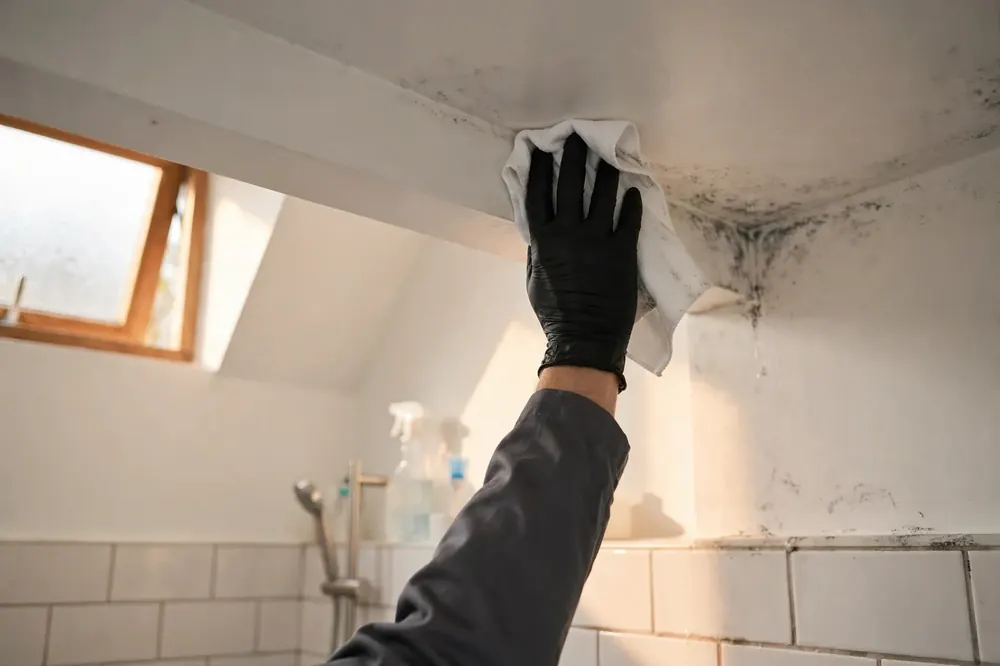
- Protect yourself. Wear gloves and a mask — scrubbing mould releases spores into the air, and ceiling work puts them right at face level.
- Apply a mould treatment. Use a dedicated mould remover rather than plain bleach — bleach fades the colour but often leaves the roots behind on porous surfaces like grout and paint.
- Scrub gently. Work the product into the ceiling with a soft brush or sponge. Avoid scouring painted ceilings aggressively or you will take the paint off with the mould.
- Rinse and dry. Wipe down with clean water, then dry the area thoroughly. Lingering dampness just invites it back.
- Fix the cause. This is the step most people skip. Without better ventilation — fan use, window opening, shorter steamy showers — the mould will return within weeks.
When to Call a Professional
DIY treatment handles light surface mould well. Call in the professionals when the growth keeps coming back after treatment, covers large areas of ceiling or wall, has spread into grout and silicone, or you suspect it is coming from a leak rather than condensation. A professional mould removal service treats the growth properly and will tell you honestly if the problem needs a tradie instead.
Prevention: Keeping Mould Away All Year
Once the ceiling is treated and dry, these habits keep it that way:
- Run the extraction fan during every shower and for a good while afterwards. If your bathroom has no fan, this is the single upgrade worth considering.
- Open the window after showering when you can — even a few centimetres of airflow makes a difference.
- Wipe down wet tiles and glass after use. Less moisture on surfaces means less moisture in the air.
- Leave the bathroom door open after showering so moist air can disperse instead of sitting on the ceiling.
- Heat the bathroom a little in winter. A slightly warmer room means the ceiling stays above the dew point and less condensation forms.
- Consider mould-resistant paint when the ceiling next needs repainting — but only on a properly treated, fully dry surface.
A sensible note: if mould keeps returning despite good ventilation, covers large areas, or you suspect water is coming from a leak rather than condensation, stop repeating DIY treatments and get a professional assessment. Persistent or widespread mould may need a specialist, and if anyone in the household has ongoing breathing issues, it is worth mentioning to your doctor.
Mould FAQs
Does bleach kill bathroom mould permanently?
Not usually. Bleach removes the surface colour but often leaves roots alive in porous grout and paint, so the mould returns. Dedicated mould treatments penetrate better and slow regrowth.
How do I stop mould coming back on the ceiling?
Ventilation is everything: run the extraction fan during and after showers, open a window when you can, and wipe down wet surfaces. If the bathroom has no fan at all, consider getting one installed.
Is bathroom mould dangerous?
For most healthy people it is mainly unpleasant, but it can aggravate asthma, allergies and respiratory issues. If anyone in the home has breathing difficulties, treat it promptly and consider professional help.
Can I paint over mould on the ceiling?
Do not paint over active mould — it will grow straight through the new paint. Treat and fully dry the area first, then use a mould-resistant bathroom paint.
Why does mould keep coming back on my Dunedin bathroom ceiling?
Because the cause is still there. Treatment kills the visible growth, but if condensation keeps forming on a cold ceiling with poor ventilation, new spores settle in within weeks. Fix the airflow and moisture first, then treat — that order is what breaks the cycle.
How do I ventilate a bathroom with no window or fan?
Leave the door open after showering, wipe down wet surfaces, and consider a small dehumidifier for the room. Longer term, getting an extraction fan installed is the most effective fix for a windowless bathroom.
Can I just ignore small mould spots?
Small spots are easy to treat now and harder later — mould spreads steadily through winter. Treat early spots with a dedicated mould remover, improve ventilation, and keep an eye on them. If they return quickly or spread, get professional advice.
Mould That Keeps Coming Back?
We treat mould properly and give you honest advice on stopping its return. Call +64 283 555 66 for a quote.